

What is a Documentary Film? A Comprehensive Guide to Types, Features, and Filmmaking Techniques
Documentary: The Art of Narrating Reality
A documentary film is a type of filmmaking that represents reality, records events, and introduces real phenomena and topics. Unlike fictional films, which are created based on a script and actors’ performances, documentaries attempt to portray reality truthfully and, of course, artistically. This cinematic genre offers a window into the real world that is often hidden from the ordinary viewer’s eye.
Documentary Filmmaking: The Art of Capturing Reality Through the Camera
Definition and Characteristics of Documentary Film
John Grierson, a Scottish critic and filmmaker, was the first to use the term “documentary” in 1926 to describe the film “Moana” by Robert Flaherty. He defined a documentary as a “creative treatment of reality.” This classic definition still well illustrates the dual nature of documentaries: commitment to reality while simultaneously providing artistic expression.
Main Features of Documentary Films
- Reality-focused: Documentaries deal with existing realities, not fictional stories
- Non-fictional: The foundation of documentaries is non-fiction, though narrative elements may be used
- Educational or informative purpose: Most documentaries aim to raise awareness, educate, or change audience perspectives
- Research element: Deep research and investigation are the basis for creating a good documentary
- Observation and interviews: Using direct observation, interviews with relevant individuals, and real documents
- Filmmaker’s perspective: The documentary reflects the filmmaker’s view of the subject and is not entirely objective
- Audience connection: Creating emotional or intellectual bonds with the audience for greater impact
“A documentary is a cinema that wants to make you think instead of merely entertaining you.” – Michael Moore, prominent American documentary filmmaker
History of Documentary Film
The history of documentary filmmaking is almost as old as the history of cinema. Since the invention of the film camera, recording reality has been one of filmmakers’ main goals.
Early Cinema and Birth of Documentary (1890-1920)
The Lumière brothers, with short films like “Workers Leaving the Factory” (1895), practically made the first documentaries in cinema history. These films merely recorded real events.
Early Golden Age (1920-1940)
“Nanook of the North” (1922) by Robert Flaherty, the first feature-length documentary, and “Man with a Movie Camera” (1929) by Dziga Vertov, are classics of this period.
Documentaries in Wartime (1940-1950)
During World War II, documentaries became propaganda tools for the countries involved. Frank Capra’s series “Why We Fight” is a prime example of this period.
Cinema Verité and Direct Cinema (1950-1970)
The “Cinema Truth” movement in France and “Direct Cinema” in the U.S., with lightweight cameras and synchronous sound, revolutionized documentary filmmaking.
Variety of Styles and the Television Era (1970-2000)
Television documentaries and diverse documentary styles, including Michael Moore’s political critique documentaries, shaped this period.
Digital Era (2000-Present)
Streaming platforms like Netflix and YouTube have provided broad access to documentaries. Documentaries such as BBC’s “Planet Earth” have become some of the most popular visual content.
Types of Documentary Films
Bill Nichols, a documentary cinema theorist, defined six main modes for documentaries, which today serve as a reference for categorizing documentaries:
| Type of Documentary | Main Features | Notable Examples |
|---|---|---|
| Expository Documentary | Use of narrator and voice-over, direct presentation of information and analysis, educational approach | “Planet Earth” (BBC), Ken Burns historical documentaries |
| Observational Documentary | Minimal filmmaker intervention, direct recording of events, no interviews or voice-over | “Primary” (Drew, 1960), “Titicut Follies” (Wiseman, 1967) |
| Participatory Documentary | Active filmmaker participation, direct interviews, interaction with subjects | “Night and Fog” (Rene, 1955), works of Michael Moore |
| Reflexive Documentary | Awareness of the filmmaking process, questioning reality representation, showing behind the scenes | “Man with a Movie Camera” (Vertov, 1929) |
| Poetic Documentary | Emphasis on aesthetic aspects, use of metaphor and allegory, free-form and experimental | “Rain” (Ivens, 1929), “Koyaanisqatsi” (Reggio, 1982) |
| Performative Documentary | Focus on subjective and emotional experiences, personal expression of the filmmaker, unclear boundary between reality and representation | “Problems with Water” (Moore, 1986), “The Sorrow and the Pity” (Trinh Minh-ha, 1989) |
Other Documentary Types by Topic
- Nature Documentary: Like BBC series narrated by David Attenborough
- Social Documentary: Examining social issues and challenges
- Historical Documentary: Narrating historical events and periods
- Scientific Documentary: Introducing phenomena and scientific advancements
- Sports Documentary: Portraying athletes’ lives or sports events
- Political Documentary: Analyzing political issues, exposés, and critiques
- Art Documentary: Introducing artists, styles, and art movements
- Biographical Documentary: Narrating the lives of prominent figures
- Travel Documentary: Introducing locations, cultures, and travel experiences
Nature Documentary
Stunning cinematography, dramatic music, and engaging narration characterize nature documentaries.
Social Documentary
Addressing pressing social issues to raise awareness and change audience perspectives.
Historical Documentary
Combining archival footage, eyewitness interviews, and reconstructed historical events.
Documentary Filmmaking Techniques
Documentary filmmaking combines art and technology and requires specific skills and techniques:
1. Pre-production: Research and Planning
- In-depth research: Thoroughly investigate the subject from various sources
- Structure design: Determine the documentary’s narrative and key points
- Subject identification: Find suitable people for interviews and film presence
- Location scouting: Choose suitable filming locations
- Production planning: Set schedule, budget, and production team
2. Production: Filming and Recording
- Observational filming: Record events without direct intervention
- Interviews: Conversations with people related to the subject
- Sound recording: Accurate recording of ambient sounds and interviewees’ voices
- Aerial filming: Using drones for captivating shots
- Handheld filming: To create a sense of realism and urgency
- Time-lapse photography: Capturing gradual changes over long periods
- Underwater or special condition filming: Using specialized equipment
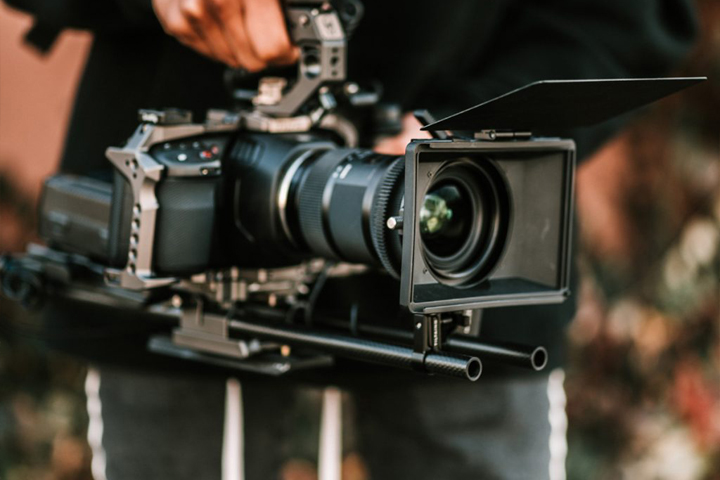
Essential equipment for producing a professional documentary film
3. Post-production: Editing and Presentation
- Non-linear editing: Organize and select the best footage
- Narration: Writing and recording voice-over
- Sound design: Mixing sound, audio effects, and music
- Color correction: Creating a consistent visual look suitable for the subject
- Motion graphics: Adding animated graphics for better explanation
- Subtitling: Adding subtitles for interviews or translation
“In documentary filmmaking, we use the language of cinema to express reality; yet this reality is never raw or direct. Even the choice of camera angle, framing, and cut timing are all interpretations of reality.” – Abbas Kiarostami
Ethical Challenges in Documentary Filmmaking
Documentary filmmakers constantly face ethical challenges stemming from the nature of representing reality:
Ethical Dilemmas in Documentary Filmmaking
- Truth versus engaging narrative: How far can one alter reality to make a documentary more engaging?
- Intervention or non-intervention: Should the filmmaker intervene in difficult situations or merely record?
- Informed consent: How to ensure subjects understand the consequences of appearing in the documentary?
- Privacy protection: Where is the line between public-interest exposé and invasion of privacy?
- Fair representation: How to avoid stereotypical or one-sided portrayals?
- Objective or subjective truth: Should the documentary aim for objective reality or present a particular perspective?
Prominent Documentary Filmmakers and Iconic Works
World-renowned Filmmakers
- Robert Flaherty: Father of documentary cinema, creator of “Nanook of the North” (1922)
- Dziga Vertov: Pioneer of experimental documentaries with “Man with a Movie Camera” (1929)
- Leni Riefenstahl: Creator of “Olympia” (1938), innovated sports filming techniques
- Frederick Wiseman: Pioneer of observational style with works like “Titicut Follies” (1967)
- Werner Herzog: German documentary filmmaker, e.g., “Cave of Forgotten Dreams” (2010)
- Errol Morris: Creator of “The Thin Blue Line” (1988), innovator of the “Interrotron” technique
- Michael Moore: Critical-political documentarian, creator of “Bowling for Columbine” (2002)
- Ken Burns: Famous for historical documentaries using the “Ken Burns effect”
- Agnes Varda: Iconic figure of the French New Wave, creator of “The Gleaners and I” (2000)
Prominent Iranian Filmmakers
- Ebrahim Golestan: Pioneer of Iranian documentary, creator of “Wave, Coral, Khara” (1964)
- Kamran Shirdel: Creator of “Qal’eh” (1966) about lepers in Tabriz
- Khosrow Sinai: Notable documentarian, e.g., “In the Land of Silence” (1974)
- Marzieh Meshkini: Creator of social documentaries like “Mirrorless Days” (1996)
- Mohsen Makhmalbaf: Filmmaker and documentarian, e.g., “Hello Cinema” (1994)
- Rakhshan Bani-Etemad: Maker of influential social documentaries
- Mehrdad Oskouei: Creator of “Days Without a Calendar” (2001) and “Dreams of the Morning” (2010)
- Mohammad Sayad: Maker of ethnographic documentaries like “Harmonica” (1972)
Nanook of the North (1922)
Robert Flaherty
The first feature-length documentary in cinema history, depicting the life of the Eskimos.
Bowling for Columbine (2002)
Michael Moore
A documentary about gun violence in America that won the Palme d’Or at Cannes.
Qal’eh (1966)
Kamran Shirdel
A striking documentary about the Baba Baghi leper colony in Tabriz.
Practical Tips for Starting Documentary Filmmaking
If you are interested in making documentaries, these tips can be a good start:
Step-by-Step Guide for Beginner Documentary Filmmakers
- Choose a subject you are passionate about – You will spend a lot of time on this topic.
- Conduct in-depth research – Examine diverse sources and take notes.
- Find a unique perspective – What makes your documentary stand out?
- Write a documentary outline – Determine the narrative and overall structure.
- Start with simple equipment – A DSLR, a good microphone, and a tripod may suffice.
- Understand natural lighting – Using natural light can reduce costs.
- Enhance interview skills – Ask open-ended questions and be a good listener.
- Shoot beyond expectations – Always film more than you think you need.
- Be patient – Sometimes you need to wait hours to capture a special moment.
- Learn editing software – Premiere Pro, Final Cut, or DaVinci Resolve are good options.
- Don’t fear feedback – Show your documentary to different people and seek their opinions.
- Plan for distribution – Consider festivals, online platforms, or local media.
“The best documentaries are those that raise more questions in the viewer’s mind than answers. The ultimate goal should be to make the audience think, not just convey information.” – David Attenborough
Want to become a documentary filmmaker?
Join the online course “From Idea to Documentary” and learn professional documentary filmmaking principles from leading filmmakers.
Conclusion: The Power of Documentary in Narrating Reality
Documentary film is a bridge between reality and art, allowing us to see the world from new perspectives. Its power lies in its ability to educate, raise awareness, foster empathy, and even drive social change. Today, with widespread access to filming equipment and distribution platforms, unprecedented opportunities exist for documentary filmmakers to share impactful real stories with the world.
Remember that every good documentary is a combination of accuracy, honesty, creativity, and the filmmaker’s unique perspective. Whether you are a viewer or aspiring filmmaker, a deeper understanding of this art-media form can enrich your experience. A documentary is a window onto reality, framed through the artistic vision of the filmmaker.



No comment